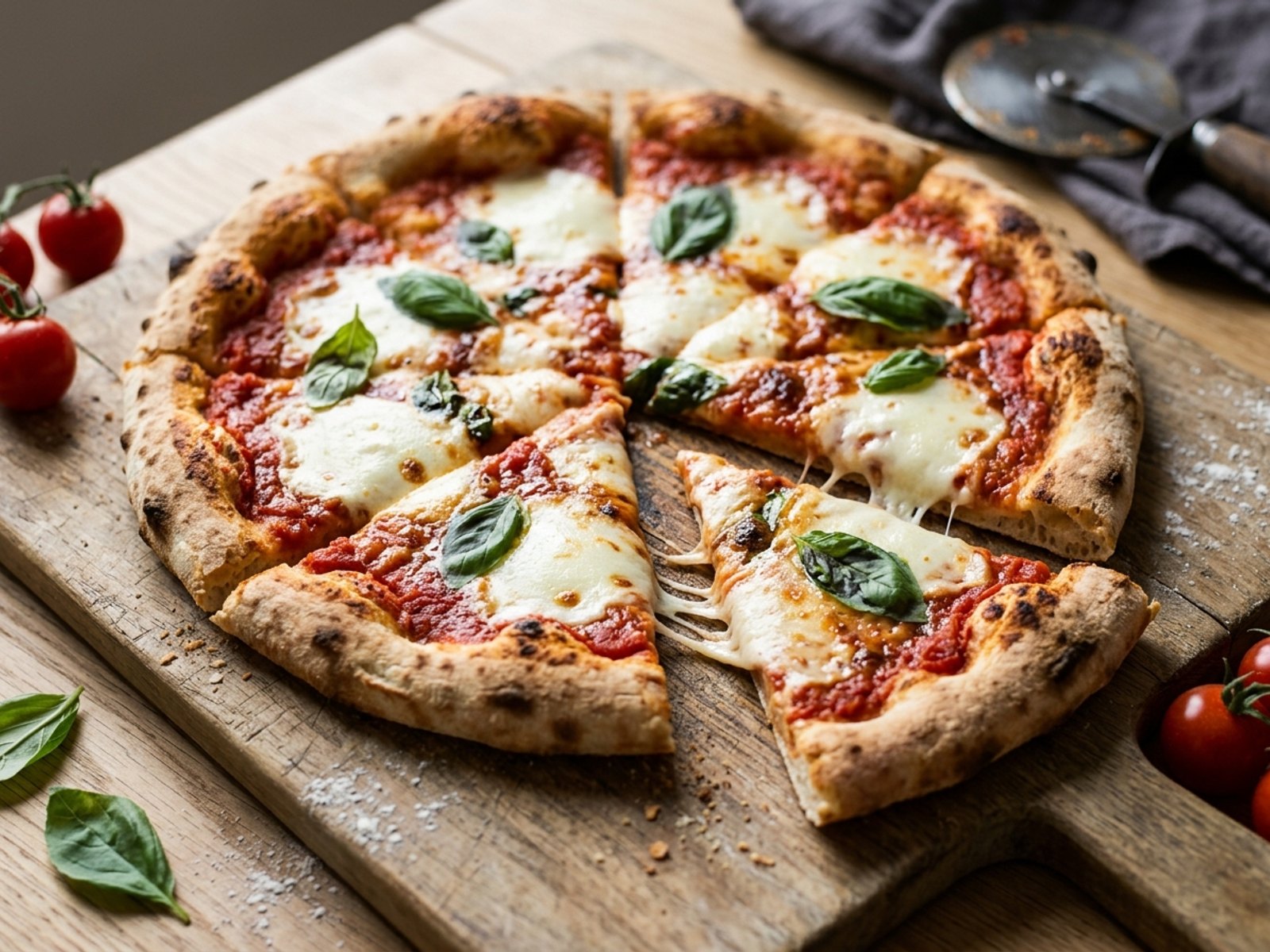
Some nights I want a project dinner, and some nights I want this classic margherita pizza on the table with almost no fuss. A chewy, blistered crust, a bright tomato sauce, milky mozzarella, and basil that still smells like a garden even though it’s the end of October. The ingredient list is short, which means every piece has to pull its weight.
I used to think a classic margherita pizza was a restaurant thing, something that needed a dome-shaped oven and a guy named Enzo. It isn’t. It’s just unforgiving about two details: wet cheese and a timid oven. Fix those and you’re most of the way home.
What a classic margherita pizza actually needs
Three toppings. That’s the whole idea. Tomato, mozzarella, basil, on dough seasoned with salt and olive oil and nothing else. The pizza comes out of Naples, and the story most often told connects it to Queen Margherita and the red, white, and green of the Italian flag. If you want the longer version, the Wikipedia page on Pizza Margherita covers both the history and the debate about how much of it is legend.
What I care about is how it should taste from a regular home oven. The sauce should taste like tomatoes, not pasta sauce. The cheese should be creamy, not a rubbery sheet. And the crust needs real color, a few charred blisters on the rim, not a uniform pale tan.
The dough, homemade or from the store
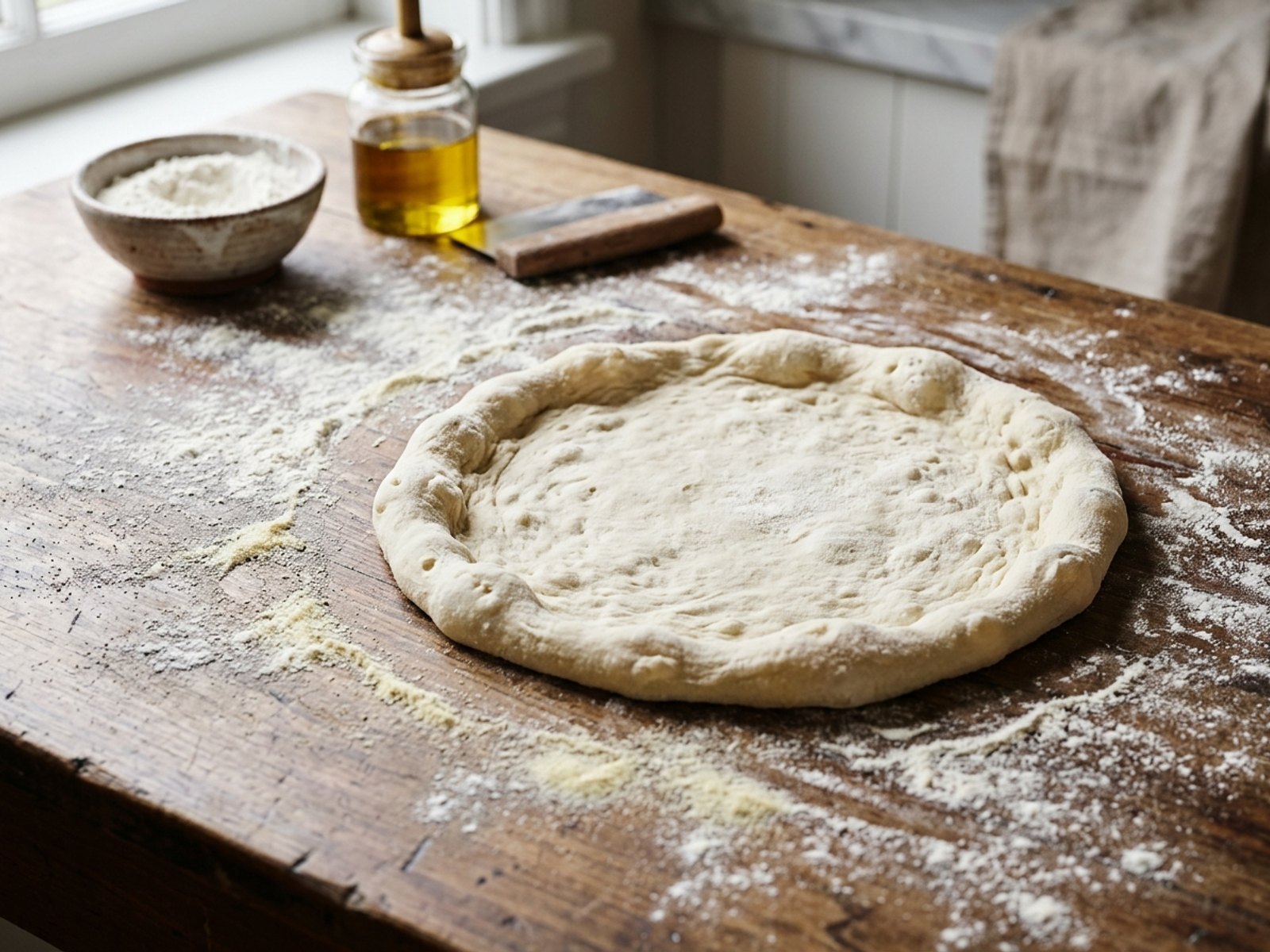
Homemade dough wins on flavor, and the recipe card below includes my everyday version. It’s a straight dough: bread flour, yeast, salt, warm water, a spoon of olive oil. Mix, knead about 8 minutes, let it double. You can also park it in the fridge for a day, where it slowly gets better.
Store-bought dough is genuinely fine, and I use it plenty. Three things make it behave:
- Take it out of the fridge 1 to 2 hours before you stretch. Cold dough snaps back like a rubber band and you’ll fight it the entire time.
- Stretch with your hands, not a rolling pin. The pin flattens the gas bubbles that make the rim puff.
- If the dough keeps shrinking, walk away for 10 minutes. The gluten relaxes and it cooperates after that.
One more option worth knowing: lots of grocery store bakeries and local pizza shops will sell you a ball of their dough for a few dollars. It’s usually better than the tube stuff and skips the whole rising window. Dough is the one place a classic margherita pizza rewards patience. Everything after it is assembly.
A sauce that’s barely a recipe
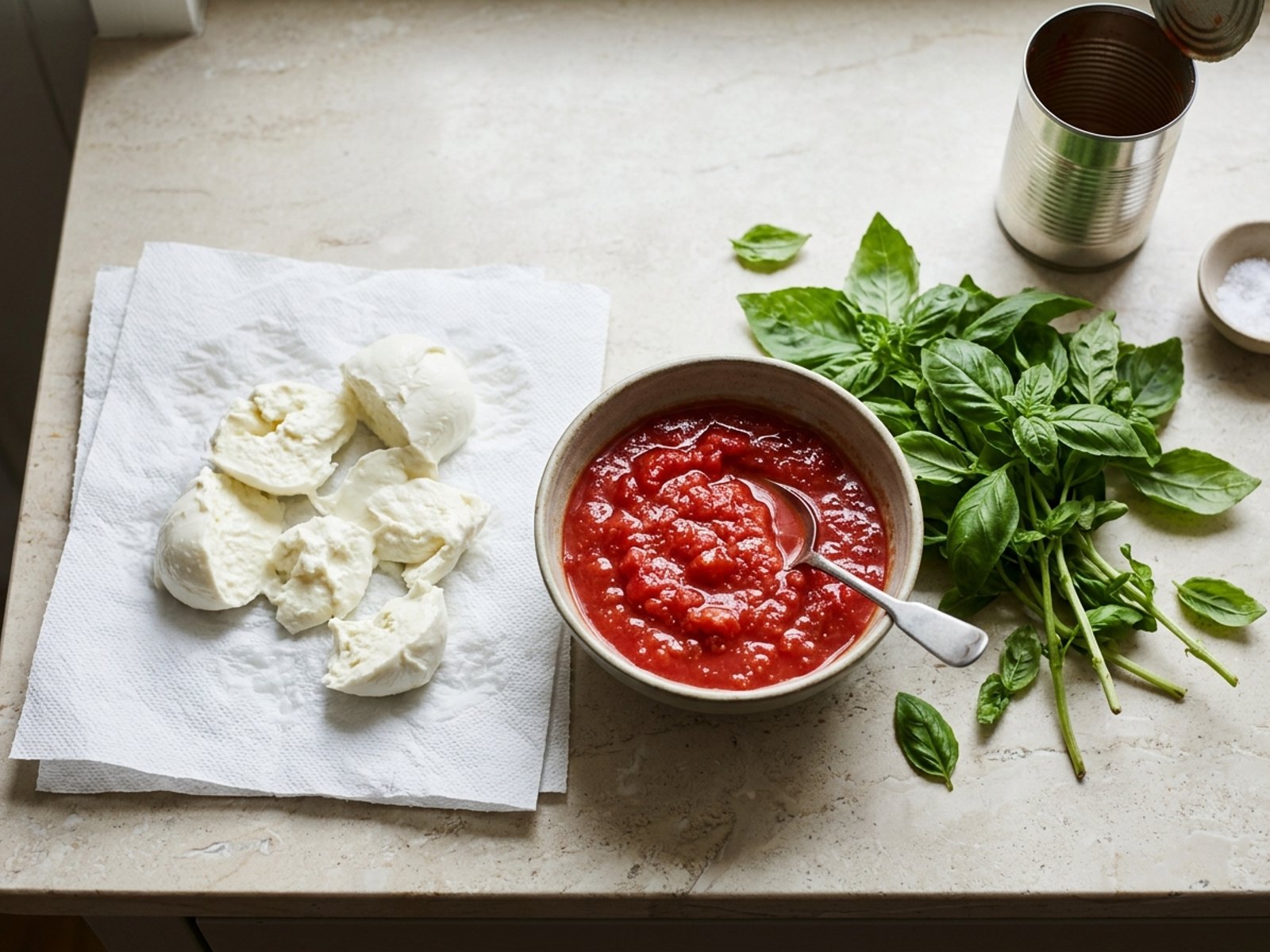
Open a can of whole peeled tomatoes, pour off a little juice if it looks thin, and crush them with your hands or a fork. Add a good pinch of salt and a small drizzle of olive oil. I sometimes grate in one small clove of garlic. No oregano, no sugar, no simmering. The oven cooks the sauce while it bakes the crust, and it stays bright instead of heavy.
Since it’s late October, this is also the honest answer on fresh tomatoes: skip them. Canned whole tomatoes beat out-of-season fresh ones by a mile. San Marzano style is lovely if you can find it, but any good whole peeled tomato works. Crush by hand so the sauce keeps a little texture.
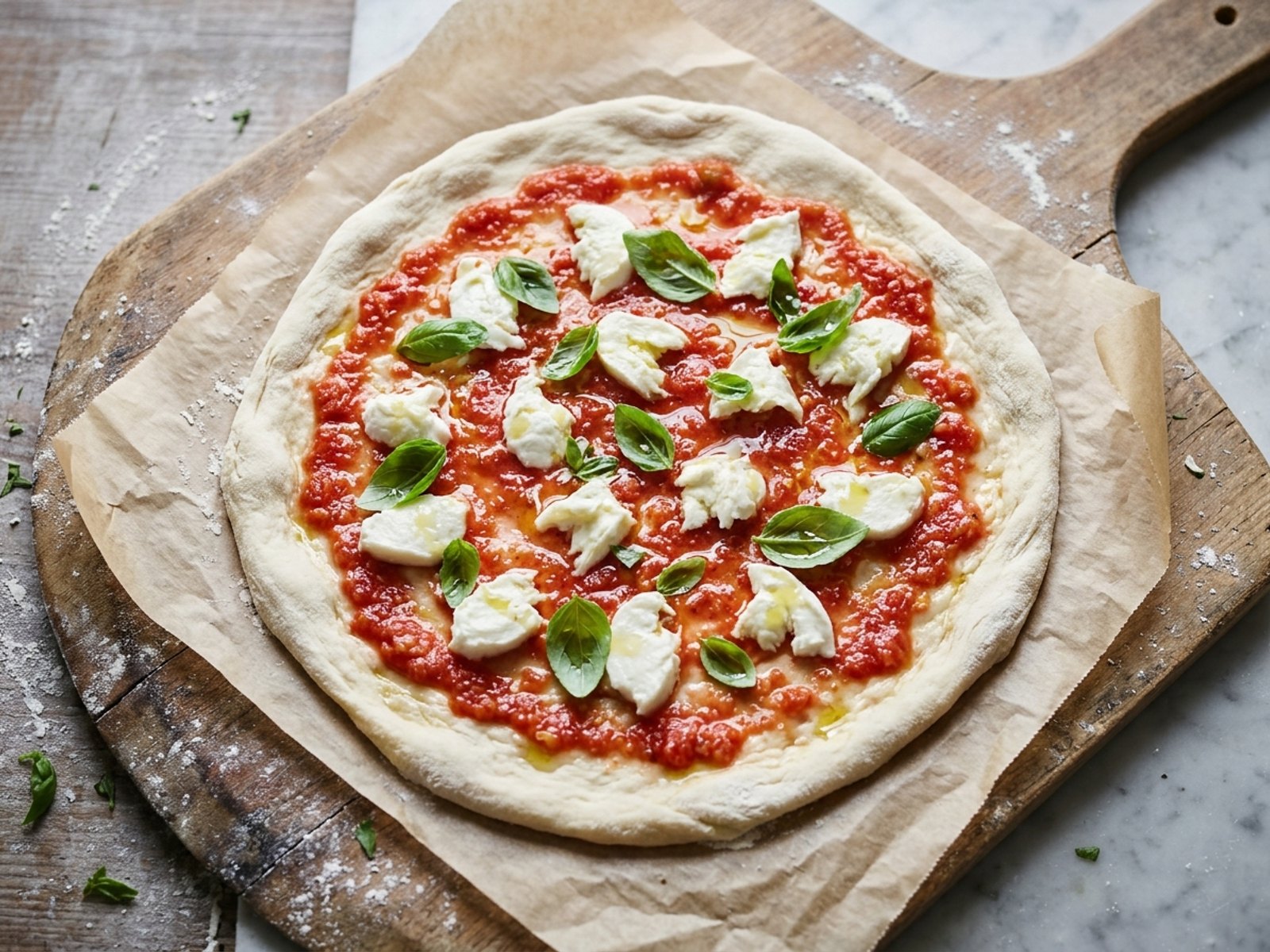
I use about 1/3 cup for a 12-inch pizza, spread so thin you can see dough through it in spots. It looks stingy. It isn’t.
Fresh mozzarella without the puddle
Fresh mozzarella is the right cheese here, but it comes packed in water and it will leak all over your crust if you skip one step. This is the step that decides whether your classic margherita pizza bakes up crisp or swims in the middle.
My routine, every time:
- Tear or slice the mozzarella into walnut-size pieces.
- Spread them on a double layer of paper towels, salt lightly, wait 15 to 20 minutes.
- Press another towel on top right before topping the pizza.
If fresh mozzarella makes you nervous, go half fresh and half low-moisture shredded. You keep the creamy pockets and get a more predictable melt.
How I keep the center from going soggy
A wet middle is the number one complaint with a classic margherita pizza, and it’s almost never one mistake. It’s three small ones stacked together. My checklist:
- Drain the cheese. Twenty minutes on towels, every time.
- Less sauce than feels right. Sauce is a condiment here, not a layer.
- A screaming hot surface. A preheated pizza steel or stone is best. An upside-down sheet pan, preheated, is a solid backup.
- Stay light. This is a spare pizza. If you’re craving a loaded one, that’s a different recipe.
- Bottom rack. The crust needs to sit close to the heat.
Assembling it, in the order that works
Dust parchment or a peel with flour or semolina and stretch the dough to about 12 inches, leaving the outer inch thicker. Then move quickly, because dough on parchment starts sticking if it sits. Thin smear of sauce, mozzarella scattered with space between the pieces, a light drizzle of olive oil. That’s it.
No peel? Build the pizza on parchment on the back of a sheet pan and use the pan itself to slide it in. Parchment handles a short blast at these temperatures; just trim the overhang so it doesn’t char.
Baking your classic margherita pizza hot and fast
Most home ovens top out at 500 to 550°F, and I use every degree of it. Slide the steel, stone, or upside-down sheet pan onto the bottom rack and preheat for a full 45 to 60 minutes. Yes, really. The surface needs that time to store heat.
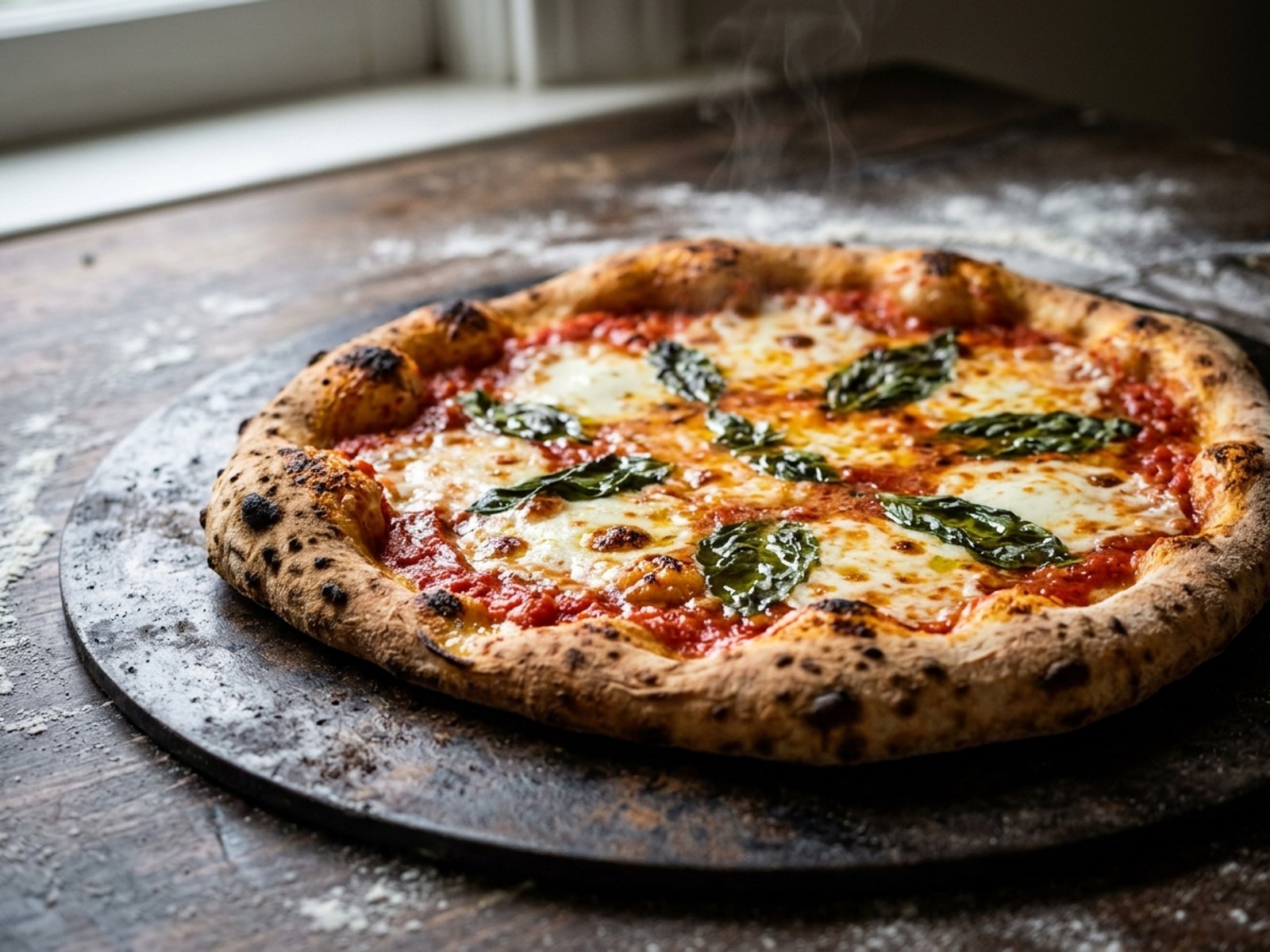
Slide the pizza in, parchment and all. Bake 8 to 10 minutes on a steel or stone, 10 to 12 on a sheet pan. You want a puffed rim, deep gold with some charred spots, and cheese bubbling with browned patches. If the bottom is perfect but the top needs a nudge, run the broiler for 60 to 90 seconds and don’t walk away.
How to tell it’s done without trusting the timer: lift an edge with tongs. The bottom should be browned in patches, not blond, and the rim should sound a little hollow when you tap it.
When the basil goes on
Fresh basil scorches black in a 550°F oven if it sits exposed. My lazy fix: tear most of it over the pizza the second it comes out, where the residual heat wilts it just enough. If you like it baked in, tuck the leaves under the cheese so they’re shielded.
Right at that moment I also add a light grate of parmesan and a thread of good olive oil. Purists can look away; it’s worth it.
Small riffs that still taste like margherita
I keep the base recipe the same and play at the edges:
- Halved cherry tomatoes scattered on before baking add sweetness.
- A few dots of pesto after it comes out of the oven.
- Swap a third of the bread flour for whole wheat for a nuttier crust.
- Burrata instead of mozzarella, added after baking so it stays creamy.
What to serve alongside
Two pizzas feed four people with a salad, and that’s usually the whole plan at my place: arugula with lemon and parmesan, or roasted broccoli with a squeeze of the same lemon. Honestly, a classic margherita pizza and something green is a complete dinner.
If you’re feeding more people, I’d rather double the dough than overload the top. On nights when I want pizza flavor without the hot-oven production, my Crockpot Pizza Casserole does the job. And if I’m building a bigger Italian-ish spread, the One Pot Lemon Ricotta Pasta or the Garlic Butter Steak Bites & Creamy Alfredo Tortellini round it out well.
Storing and reheating
Leftover slices of classic margherita pizza keep 3 to 4 days in a sealed container in the fridge, which lines up with the government’s cold storage chart for cooked leftovers. Reheat in a dry skillet over medium with a lid on for a few minutes, or on a sheet pan at 400°F for about 8. Skip the microwave; it turns the crust rubbery.
Extra dough freezes well. Wrap each ball tightly, freeze up to 3 months, thaw overnight in the fridge, then let it come to room temperature before stretching.
Before you turn the oven on
Make this classic margherita pizza once and you’ll start forming your own opinions about sauce amounts and bake times, which is exactly how it should go. The recipe card below has the dough, the store-bought shortcut, and every temperature in one place.
If you make it, tell me how it went and what you’d change. Now go preheat the oven; it’s the longest step you’ve got.
Classic Margherita Pizza (Crispy Crust, No Soggy Center): the recipe
Prep 75 min · Cook 12 min · Total 87 min · Serves 4
Ingredients
For the dough (or use 1 lb store-bought pizza dough)
- 3 1/2 cups (440 g) bread flour, plus more for dusting
- 1 teaspoon instant yeast
- 2 teaspoons fine sea salt
- 1 1/3 cups (320 ml) warm water
- 1 tablespoon olive oil
For the sauce and toppings
- 1 can (14 oz) whole peeled tomatoes, drained if watery
- 1/2 teaspoon fine sea salt
- 1 small garlic clove, grated (optional)
- 8 oz fresh mozzarella, torn and drained on paper towels
- 1 tablespoon olive oil, plus more for drizzling
- Fresh basil leaves
- Grated parmesan, for serving (optional)
- Cornmeal or semolina, for the peel
Instructions
- Make the dough: whisk the flour, yeast, and salt in a large bowl. Add the warm water and olive oil, stir into a shaggy dough, then knead about 8 minutes until smooth.
- Cover and let rise 1 hour at room temperature, until doubled (or refrigerate up to 24 hours). If using store-bought dough, let it sit at room temperature for 1 to 2 hours.
- Place a pizza steel, stone, or upside-down sheet pan on the bottom rack and preheat the oven to 500-550°F for 45 to 60 minutes.
- Make the sauce: crush the drained tomatoes by hand in a bowl with the salt and garlic. It should be thick, not watery.
- Divide the dough in half. Stretch each piece on a floured surface into a 12-inch round with a thicker rim, then transfer to parchment on a peel or sheet pan.
- Spread about 1/3 cup sauce thinly over each round, leaving the rim bare. Scatter the mozzarella with space between pieces and drizzle with olive oil.
- Slide the pizza onto the hot surface and bake 8 to 10 minutes on a steel or stone, 10 to 12 on a sheet pan, until the crust is deep golden with charred blisters and the cheese is bubbling.
- Top with torn basil, optional parmesan, and a drizzle of olive oil. Slice and serve hot.
Notes
- Drain the mozzarella on paper towels for 15 to 20 minutes; it’s the single best fix for a soggy center.
- If your canned tomatoes look watery, pour off the extra juice before crushing.
- Cold dough is hard to stretch; let it come fully to room temperature first.
- No peel? Build the pizza on parchment on the back of a sheet pan.
- Broil 60 to 90 seconds at the end if the top needs more color.
- A cast iron skillet works in a pinch: build the pizza inside it and bake on the bottom rack.
Nutrition per serving
Calories: 480 · Protein: 19g · Carbs: 62g · Fat: 16g · Fiber: 4g · Sugar: 4g · Sodium: 780mg