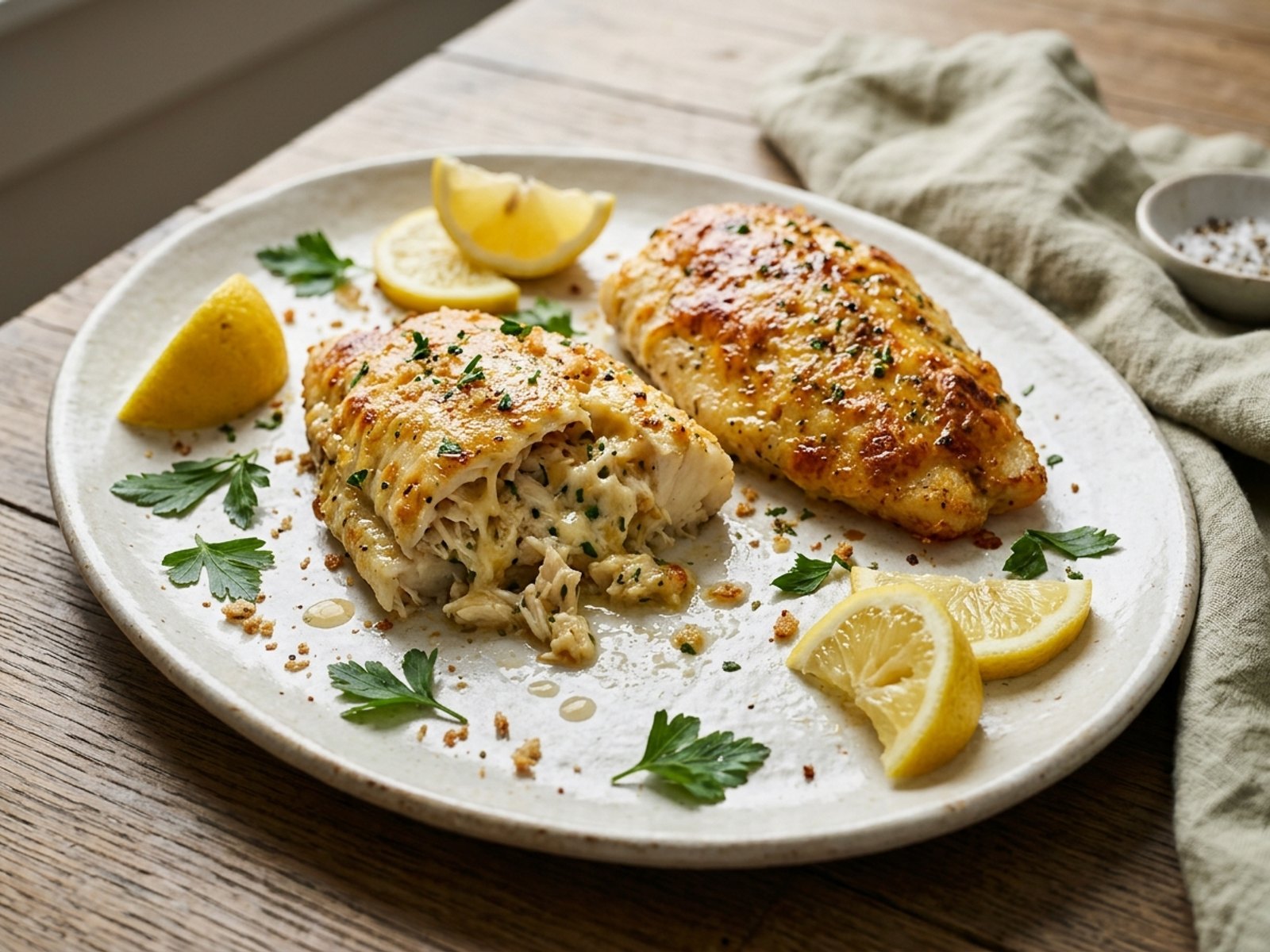
The first cool evenings of fall always put me in the mood for something that feels a little dressed up, and fish cordon bleu with crab is my favorite way to get there without spending the whole afternoon cooking. It’s a rolled, breaded fillet that slices into a pretty spiral of sweet crab and melted Gruyère, and it lands on the table in about 45 minutes.
If you know the classic chicken version, the idea is the same: something mild on the outside, something rich in the middle. Here the outside is redfish and the middle is lump crab with nutty aged Gruyère, which honestly makes more sense to me than ham ever did. I make this fish cordon bleu with crab when I want a dinner that reads like restaurant food but uses one skillet and a sheet of parchment.
Why fish cordon bleu with crab is worth the extra ten minutes
Lean white fish dries out fast. That’s just the deal. Rolling fish cordon bleu with crab around a fatty, moist filling fixes the problem from the inside, because the crab and cheese stay juicy even if your timing on the fish is a minute or two off.
A few more reasons this one earns its place:
- The filling seasons the fish from the inside out, so you don’t need a heavy sauce to make it taste like something.
- The panko crust gives you crunch and a buffer between the pan and the delicate fillet.
- It slices into rounds that look like you went to cooking school. Nobody has to know it took one pan.
- Crab makes it feel special without lobster prices or lobster stress.
Picking the fish, the crab, and the cheese
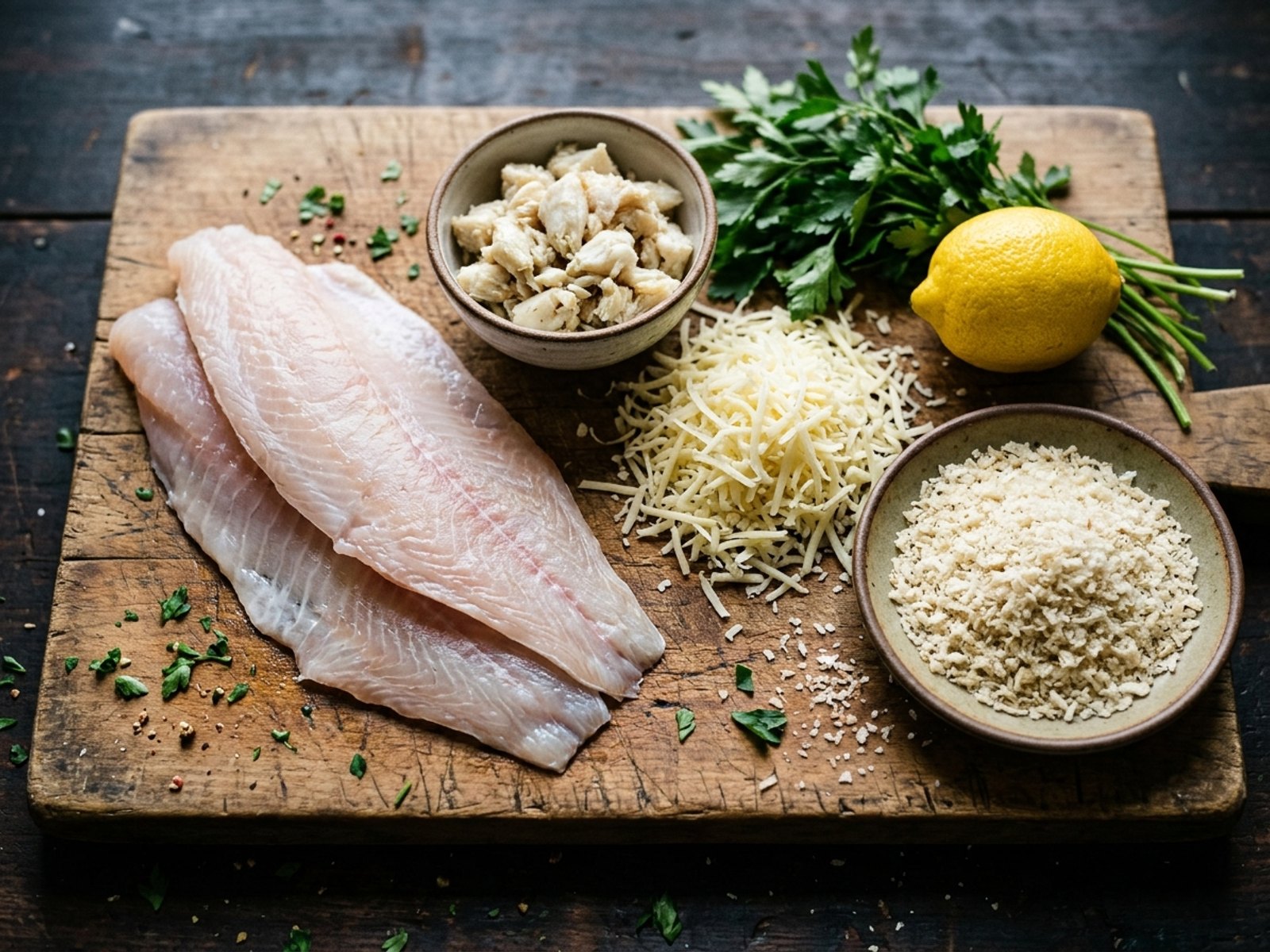
For fish cordon bleu with crab, I want a fillet that’s firm enough to hold a roll but mild enough to let the crab talk. Redfish (red drum) is ideal: meaty, slightly sweet, and it doesn’t fall apart when you pound it. If your store doesn’t carry it, red snapper, tilapia, cod, haddock, or catfish all work. Avoid anything paper-thin like sole or flounder unless you’re very gentle, because it tears when you roll it.
On the crab, refrigerated pasteurized lump crab is what I buy most often. Drain it well and pick through for shell bits, which takes ninety seconds and saves a bad bite. Claw meat is cheaper and fine here; imitation crab is not, because it turns rubbery in the oven.
The Gruyère should be aged if you can get it, since aged Gruyère is saltier and nuttier, and a little goes further. Grate it yourself from the block. Pre-shredded cheese is coated to keep it from clumping in the bag, and it doesn’t melt as smoothly in a thin layer like this.
How I put fish cordon bleu with crab together
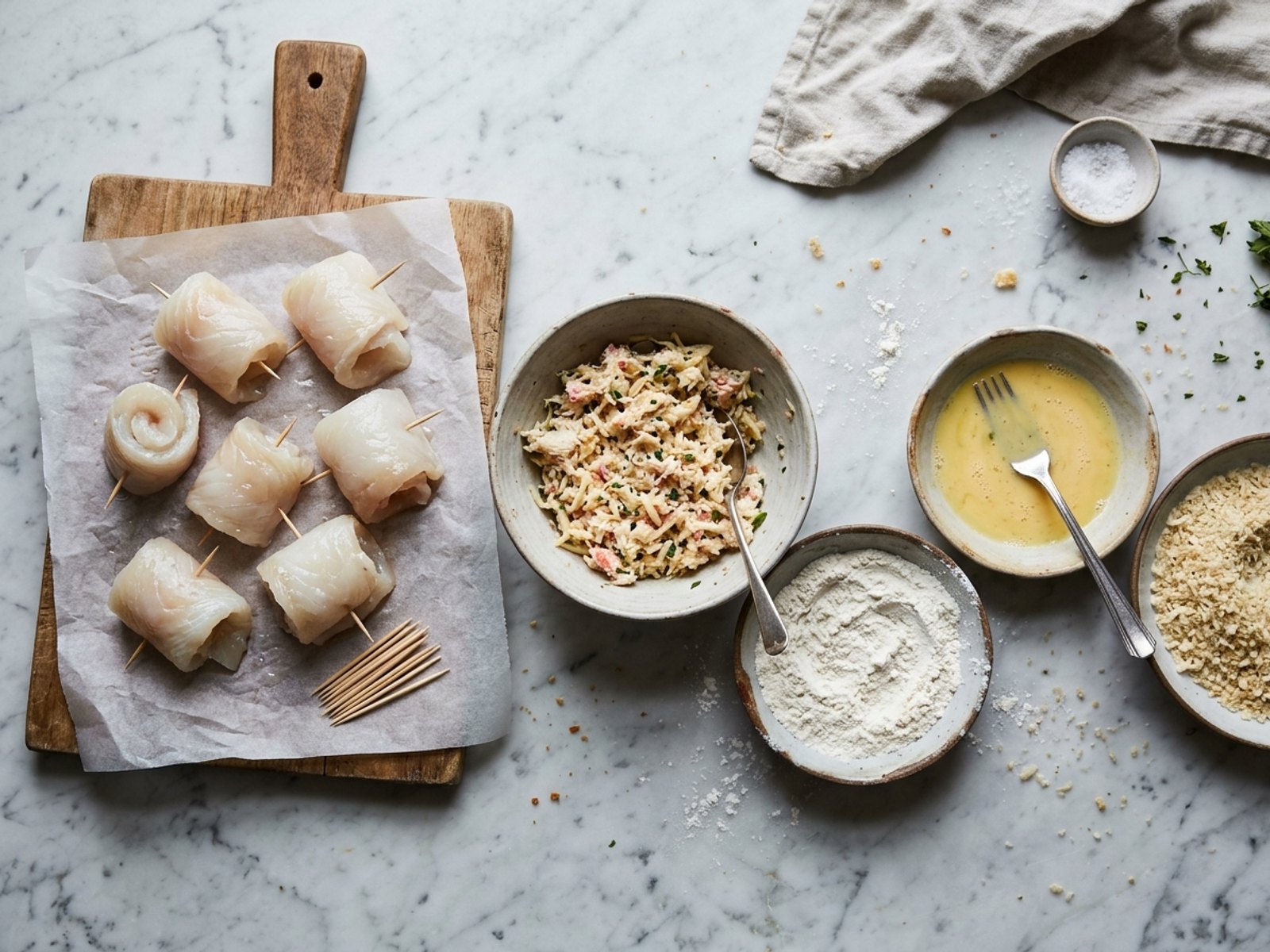
The assembly is the only fiddly part, and it gets easy fast. Set a fillet between two pieces of parchment or inside a zip bag and tap it with a mallet or the bottom of a small pan until it’s an even quarter inch thick. Thick fillets can be butterflied first. You’re not trying to make it paper-thin, just even, so it rolls without cracking.
Pat everything dry. Wet fish won’t hold a crust and wet filling steams instead of melting. Then the order of operations is simple:
- Stir the crab filling gently. Keep it loose and don’t pack it down, because a packed filling squeezes out the sides when the fish tightens in the pan.
- Season the flattened fillet lightly with salt and pepper.
- Spread 2 to 3 tablespoons of filling over the fillet, leaving a half-inch border at the edges.
- Roll from the narrow end toward the wide end and pin each roll with two toothpicks, one near each end.
- If you have 15 minutes, chill the rolls uncovered. Cold rolls hold their shape noticeably better in the pan.
Cooking it through without drying it out
This is the part where people overcook it, so let me be direct: the crab and the cheese inside are already cooked. The only thing you’re really cooking is the fish wrapper, and it wants 145°F in the center of the roll, which is the number on the federal safe minimum temperature chart for fish.
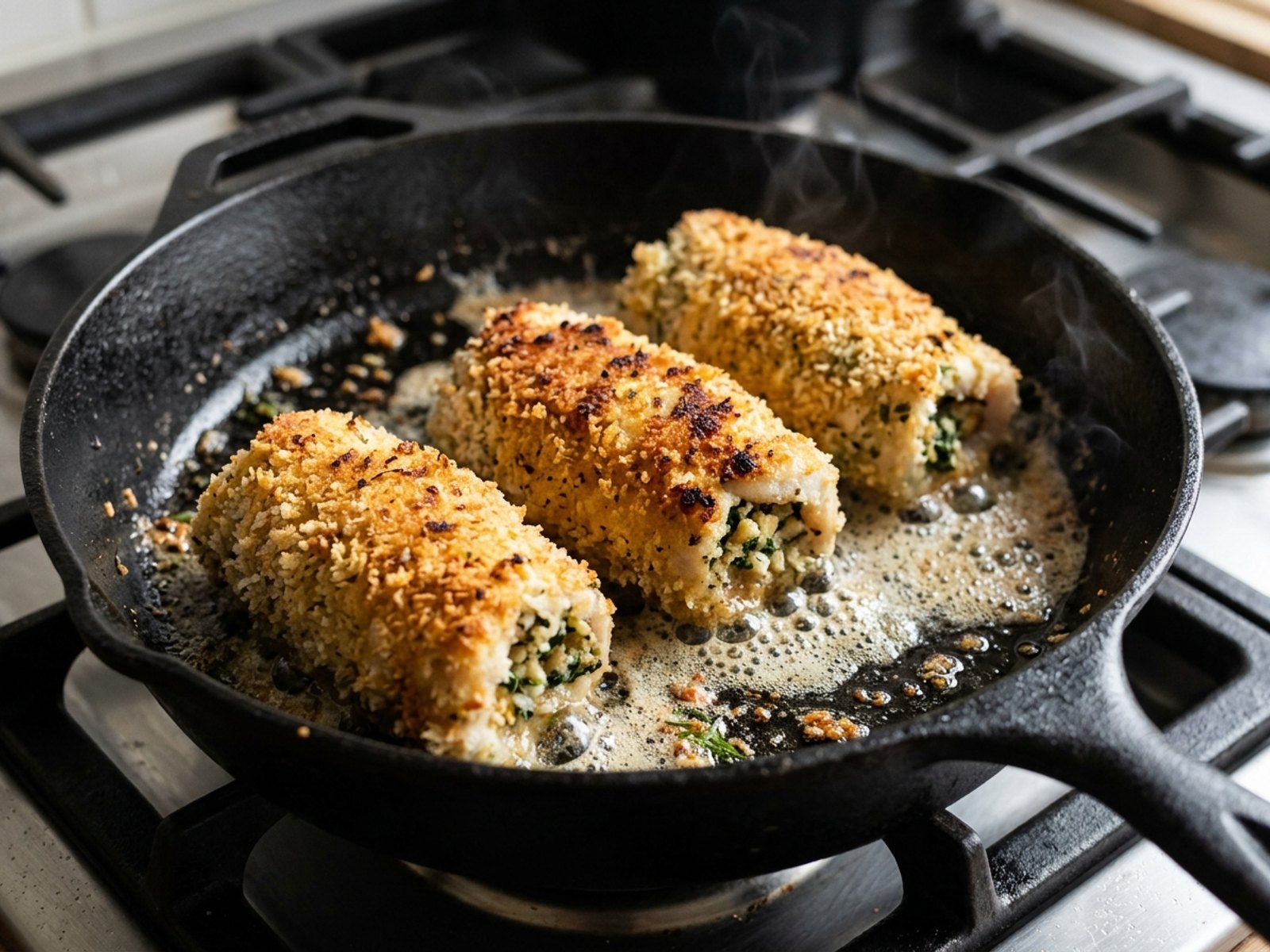
I sear first for color. Get the butter and oil foamy in an oven-safe skillet over medium-high heat, lay the rolls in seam-side down, and give them 2 to 3 minutes per side, turning gently, until the panko is deep golden. You’re building crust, not cooking the fish through.
Then the whole pan goes into a 400°F oven for 8 to 12 minutes. Start checking early with a thermometer slid in sideways through the thickest part until it reaches the middle. Pull the pan at 145°F, because carryover heat will nudge it a few degrees while it rests. Give it 5 minutes on a warm plate, tug the toothpicks out, then slice.
Two mistakes I see: cranking the oven higher to speed things up (the crust burns before the middle catches up) and slicing right away, which lets the melted cheese run out instead of setting into that nice spiral.
A fast lemon butter pan sauce
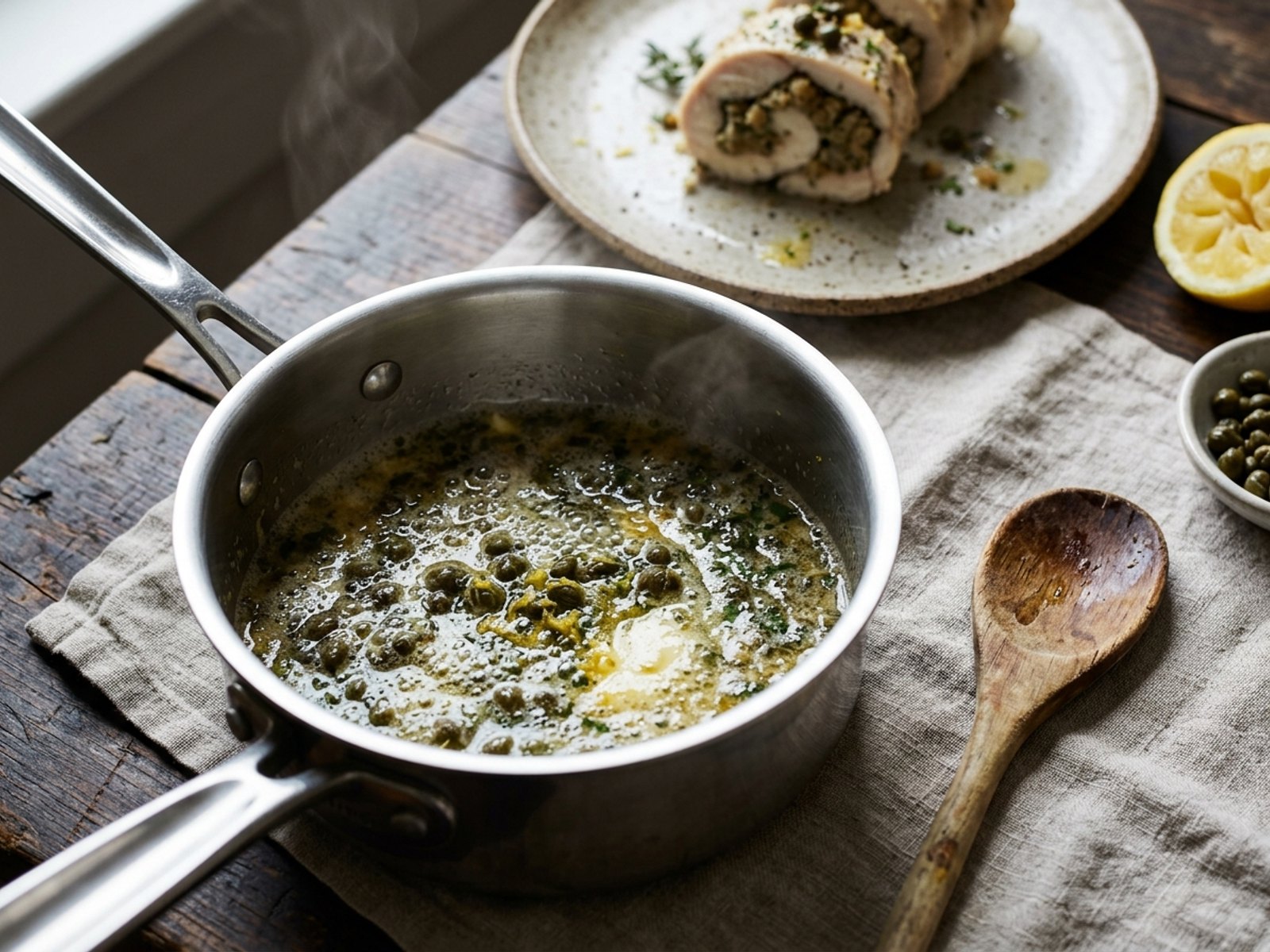
You don’t need a sauce, but the browned bits in that skillet are free flavor. While the rolls rest, set the pan back over medium heat, melt the butter, and let the garlic go fragrant, about 30 seconds. Splash in the wine or broth, scrape up the good stuff, then add the lemon juice and capers.
Swirl until it looks glossy and slightly thick, stir in the parsley, and spoon it over the sliced rolls. It takes about two minutes and it makes the whole plate taste brighter against the rich filling.
What I serve alongside
Because fish cordon bleu with crab is rich and a little salty from the cheese, I keep the sides plain and green: roasted asparagus or green beans, rice or mashed potatoes to catch the pan sauce, and a squeeze of lemon at the table. Crusty bread is never wrong here.
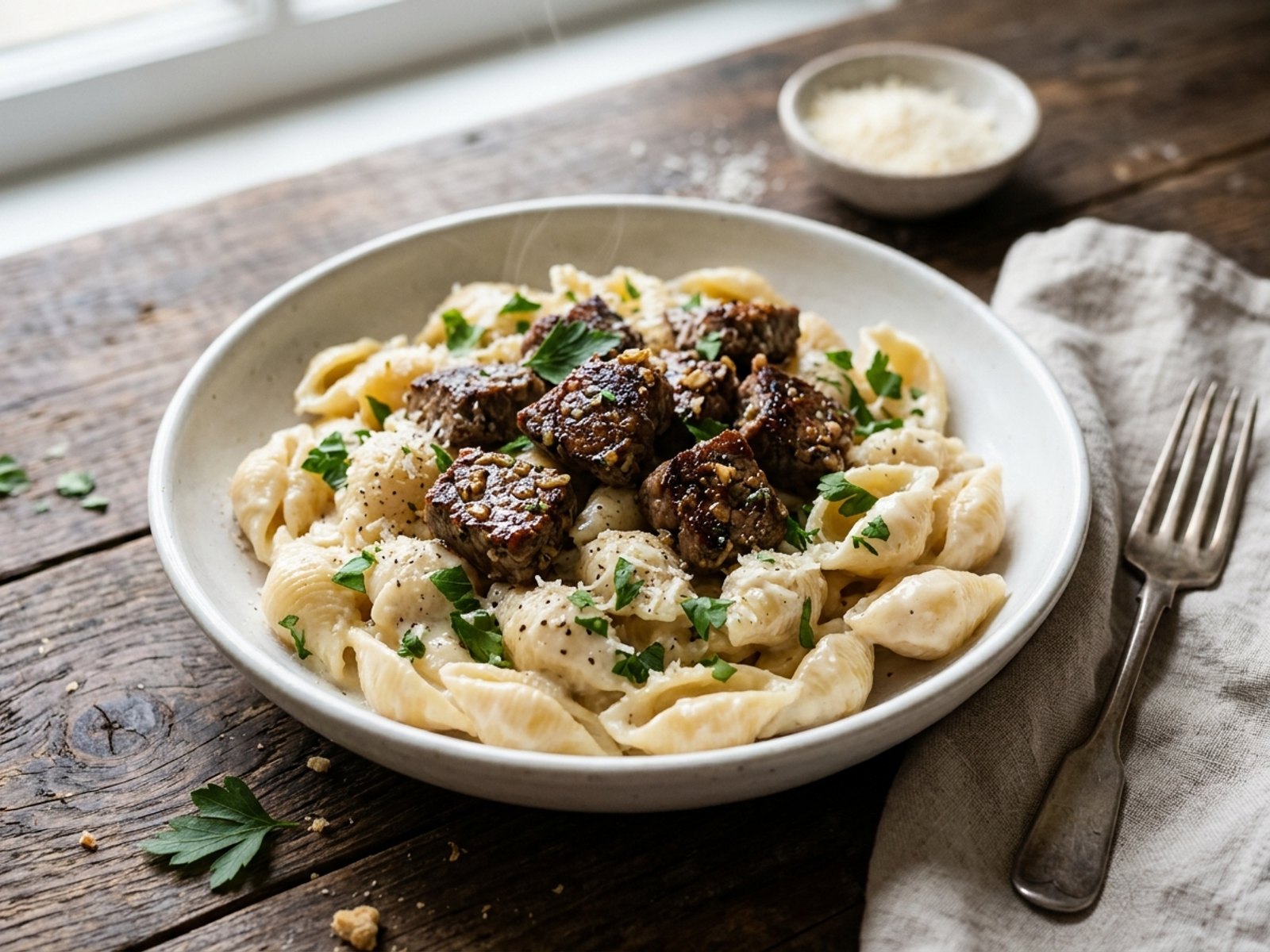
If your household likes a seafood night as much as mine does, the two recipes we rotate most are the Shrimp Tacos and the Sheet Pan Orange Ginger Salmon with Broccoli. And if it’s the stuffed-and-saucy vibe you’re after on a steak night, the Garlic Butter Steak Bites & Creamy Alfredo Tortellini hits a similar note. For a bigger spread, a small bowl of One Pot Lemon Ricotta Pasta alongside plays really well with the lemon butter sauce.
Leftovers and making it ahead
You can assemble fish cordon bleu with crab up to 8 hours ahead: roll, pin, and bread, then refrigerate the rolls uncovered on a rack or plate. Cold rolls actually sear better, so I often build them in the afternoon and cook at dinner. Just add 2 to 3 minutes to the oven time if they go in fridge-cold.
Cooked leftovers keep 3 to 4 days in an airtight container in the fridge, which lines up with the USDA’s guidance on leftovers. Reheat in a 350°F oven or air fryer for about 10 minutes so the crust crisps back up. The microwave works but the panko goes soft, and the crust is half the point.
To freeze, freeze the unbaked breaded rolls on a tray until solid, then bag them for up to 2 months. Bake from frozen at 400°F for 20 to 25 minutes, still checking for that 145°F center.
Before you start
Fish cordon bleu with crab looks like the kind of thing you’d order out, but it comes down to four moves: flatten, fill, roll, and don’t overcook it. Buy good crab, keep the filling loose, trust your thermometer, and pull the rolls the second they hit 145°F. The rest is just a very good dinner.
Redfish Cordon Bleu with Crab and Aged Gruyère: the recipe
Prep 25 min · Cook 20 min · Total 45 min · Serves 4
Ingredients
For the fish rolls
- 4 redfish fillets, about 6 oz each, skin removed (red snapper, tilapia, or cod work too)
- 8 oz lump crab meat, drained and picked over for shells
- 1 cup (4 oz) grated aged Gruyère
- 2 tbsp mayonnaise
- 1 tsp Dijon mustard
- 1 green onion, finely sliced
- 1 tbsp chopped fresh parsley, plus more for serving
- 1 tsp lemon zest
- 1/2 tsp Old Bay seasoning (or a pinch of cayenne)
- 1/2 tsp kosher salt, plus more for the fillets
- 1/4 tsp black pepper
For the breading and searing
- 1/2 cup all-purpose flour
- 2 large eggs, beaten with 1 tbsp water
- 1 cup panko breadcrumbs
- 2 tbsp olive oil
- 2 tbsp unsalted butter
For the lemon butter sauce
- 3 tbsp unsalted butter
- 1 garlic clove, minced
- 2 tbsp dry white wine or chicken broth
- 2 tbsp fresh lemon juice
- 1 tbsp capers, drained (optional)
- Toothpicks for securing the rolls
Instructions
- Heat the oven to 400°F. Place each fillet between parchment and pound gently to an even 1/4-inch thickness (butterfly first if very thick). Pat dry and season lightly with salt and pepper.
- In a bowl, gently stir together the crab, Gruyère, mayonnaise, Dijon, green onion, parsley, lemon zest, Old Bay, 1/2 tsp salt, and pepper. Keep the mixture loose; do not pack it down.
- Spread 2 to 3 tablespoons of filling over each fillet, leaving a 1/2-inch border. Roll from the narrow end to the wide end and secure each roll with two toothpicks. Chill 15 minutes if time allows.
- Set up three shallow dishes: flour, beaten eggs, and panko. Coat each roll in flour, then egg, then panko, pressing lightly so the crumbs adhere.
- Heat the oil and butter in a large oven-safe skillet over medium-high heat until foamy. Sear the rolls 2 to 3 minutes per side, turning gently, until deep golden all over.
- Transfer the skillet to the oven and bake 8 to 12 minutes, until a thermometer inserted sideways into the center of a roll reads 145°F.
- Rest the rolls on a warm plate for 5 minutes. Meanwhile, make the sauce in the same skillet: melt the butter over medium heat, cook the garlic 30 seconds, add the wine and lemon juice, scrape up browned bits, stir in capers, and swirl until glossy.
- Remove the toothpicks, slice the rolls on a bias, spoon the sauce over, and finish with parsley.
Notes
- Keep the filling to 2 to 3 tablespoons per fillet; overstuffing is the main reason rolls burst in the pan.
- The crab and cheese are already cooked, so the 145°F reading is for the fish wrapper itself. Pull right at temperature and let carryover heat finish the job.
- Assemble and bread up to 8 hours ahead and refrigerate; cold rolls sear better. Add 2 to 3 minutes of oven time.
- No aged Gruyère? Comté, Swiss, or fontina all melt well. Avoid pre-shredded cheese, which melts less smoothly.
- Leftovers keep 3 to 4 days refrigerated. Reheat in a 350°F oven or air fryer for 10 minutes to re-crisp the panko.
Nutrition per serving
Calories: 540 · Protein: 44g · Carbs: 18g · Fat: 30g · Fiber: 1g · Sugar: 1g · Sodium: 720mg